
Genomic surveillance enables characterisation of tuberculosis distribution in Catalonia
World Tuberculosis Day
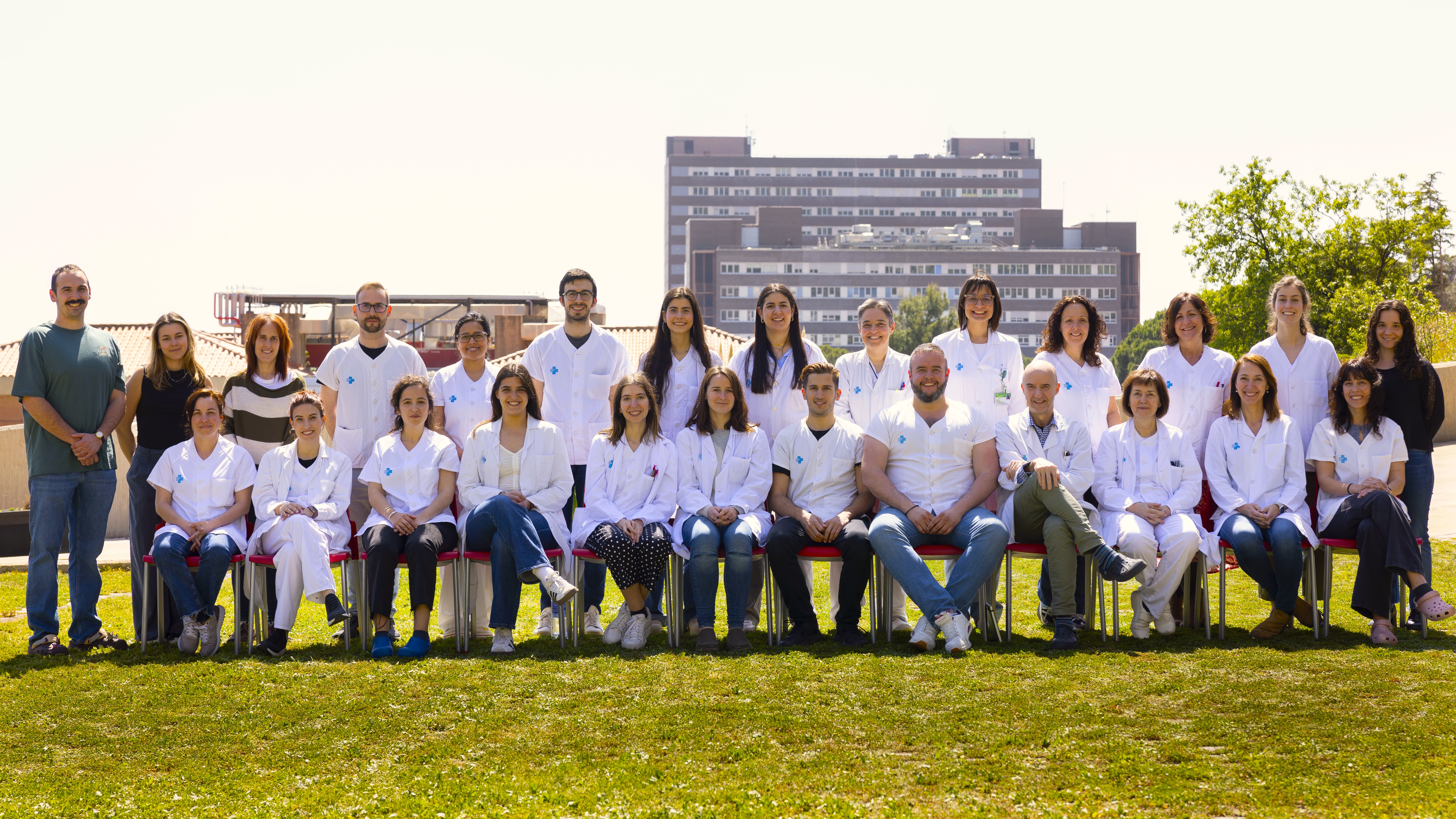
A study led by IGTP, the Germans Trias i Pujol University Hospital and theIBV-CSIC analyses bacterial strains between 2021 and 2023 and shows how genomic sequencing can improve transmission detection and inform public health interventions.
A research team led by the Germans Trias i Pujol Research Institute (IGTP), the Germans Trias i Pujol University Hospital and the Institute of Biomedicine of Valencia (IBV-CSIC) has published in the journal Frontiers in Microbiology the first results of the TB-SEQ pilot program, an initiative that applies genomic sequencing to study tuberculosis (TB) transmission in Catalonia.
Genomic sequencing allows analysis of the genetic material of the bacterium that causes tuberculosis and comparison of strains detected in different patients. If two genomes are almost identical - with very few mutations between them - they are likely to belong to the same transmission chain.
This type of analysis provides a new perspective for studying disease spread and may help identify outbreaks that would go unnoticed using traditional contact-tracing methods.
Tuberculosis remains a global public health issue. Each year, more than 10 million people develop the disease and approximately 1.5 million die from it. In 2023, it once again became the leading cause of death from a single infectious agent worldwide, after three years during which COVID-19 held that position.
In Catalonia, incidence remains at around 15.2 new cases per 100,000 inhabitants, with more than 1,200 cases diagnosed annually (according to recently published 2024 data).
A tool to better understand transmission
The study describes the genetic structure of Mycobacterium tuberculosis strains circulating in the region between December 2021 and June 2023 and analyses their geographical and temporal distribution to better understand transmission patterns.
The results show that the most frequent lineage in Catalonia is L4, present throughout the territory and found in both the native population and individuals born outside Spain. Other lineages, such as L1/EAI, L2/Beijing or L3/CAS, are more frequent in specific areas and are often associated with people originating from regions where these subtypes are more prevalent.
The analysis also identifies the Barcelona Metropolitan Area as a key zone where several clusters of specific bacterial lineages are concentrated. According to the researchers, factors such as population density and migration patterns may influence the distribution of different Mycobacterium tuberculosis subtypes.
Overall, these findings provide relevant insights into tuberculosis transmission dynamics and could help guide public health strategies targeting specific areas or population groups.
The TB-SEQ project
The study is part of the TB-SEQ pilot project, launched in Catalonia at the end of 2021 with the aim of integrating genomic sequencing into tuberculosis epidemiological surveillance activities.
The initiative was promoted by the Microbiology Department of the Germans Trias i Pujol University Hospital and the Germans Trias i Pujol Research Institute (IGTP), in collaboration with the Institute of Biomedicine of Valencia (IBV-CSIC), and was supported by the CIBER in Epidemiology and Public Health (CIBERESP; project Ref.: ESP22PI06).
Within the framework of the reform of epidemiological surveillance promoted after the COVID-19 pandemic, this strategy was formally incorporated in 2022 into the Tuberculosis Control Program of Catalonia, coordinated by the Public Health Agency of Catalonia.
The Microbiology Department of Germans Trias Hospital centralises positive tuberculosis cultures from laboratories across the territory to carry out genomic sequencing. The program involves collaboration with the network of clinical microbiology laboratories in Catalonia, epidemiological surveillance services, and the public health agencies of Barcelona and Catalonia.
The research team
The study is led by Elisa Martró, researcher at IGTP, and Verónica Saludes, both affiliated with the Microbiology Department of Germans Trias Hospital, together with Iñaki Comas and Mariana G. López, researchers at the Institute of Biomedicine of Valencia (IBV-CSIC).
The project involves a broad collaborative network of laboratories and institutions across Catalonia and includes the participation of research groups from CIBERESP, CIBERES and CIBERINFEC.
Reference
Antoni E. Bordoy, Vadim Leonov, Mariana G. López, Elisabet Sicart-Torres, Laia Soler, Adrián Antuori, David Panisello Yagüe, Miguel Moreno-Molina, Laura Gavaldà, Jacobo Mendioroz, Pere-Joan Cardona, Iñaki Comas, Verónica Saludes, Elisa Martró, TB-SEQ Study Group. Population structure and spatial distribution of Mycobacterium tuberculosis complex in Catalonia. Front. Microbiol. 17:1787894. DOI: 10.3389/fmicb.2026.1787894