
CEEISCAT promotes the translation of public health research at its 8th Annual Meeting
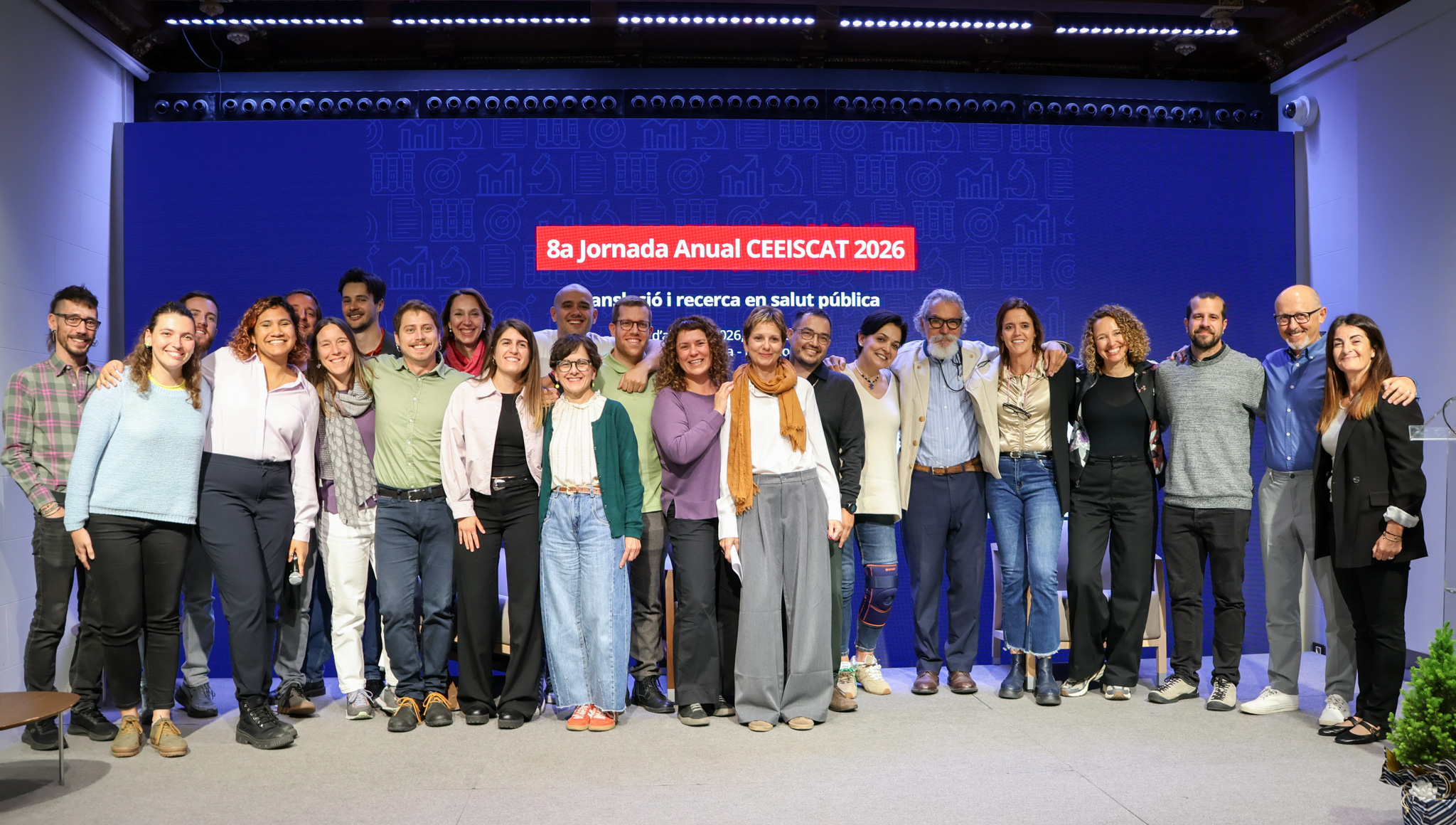
On 14 April, the Centre for Epidemiological Studies on HIV/AIDS and STI of Catalonia (CEEISCAT), a research group of the Germans Trias i Pujol Research Institute (IGTP), held its 8th Annual Meeting at Palau Macaya in Barcelona, bringing together around 100 professionals from research, public health and the community sector.
Under the theme "Translation and research in public health", the meeting focused on how scientific knowledge is transformed into action, impact and real improvements in population health.
The event opened with welcoming remarks from Marga Gómez, head of operations at Palau Macaya, followed by the institutional welcome delivered by Esteve Fernández, secretary of Public Health at the Department of Health, and Ernest Nadal, director of Research and Innovation at Institut Català d'Oncologia (ICO), on behalf of the general management.
A strategic outlook on public health research
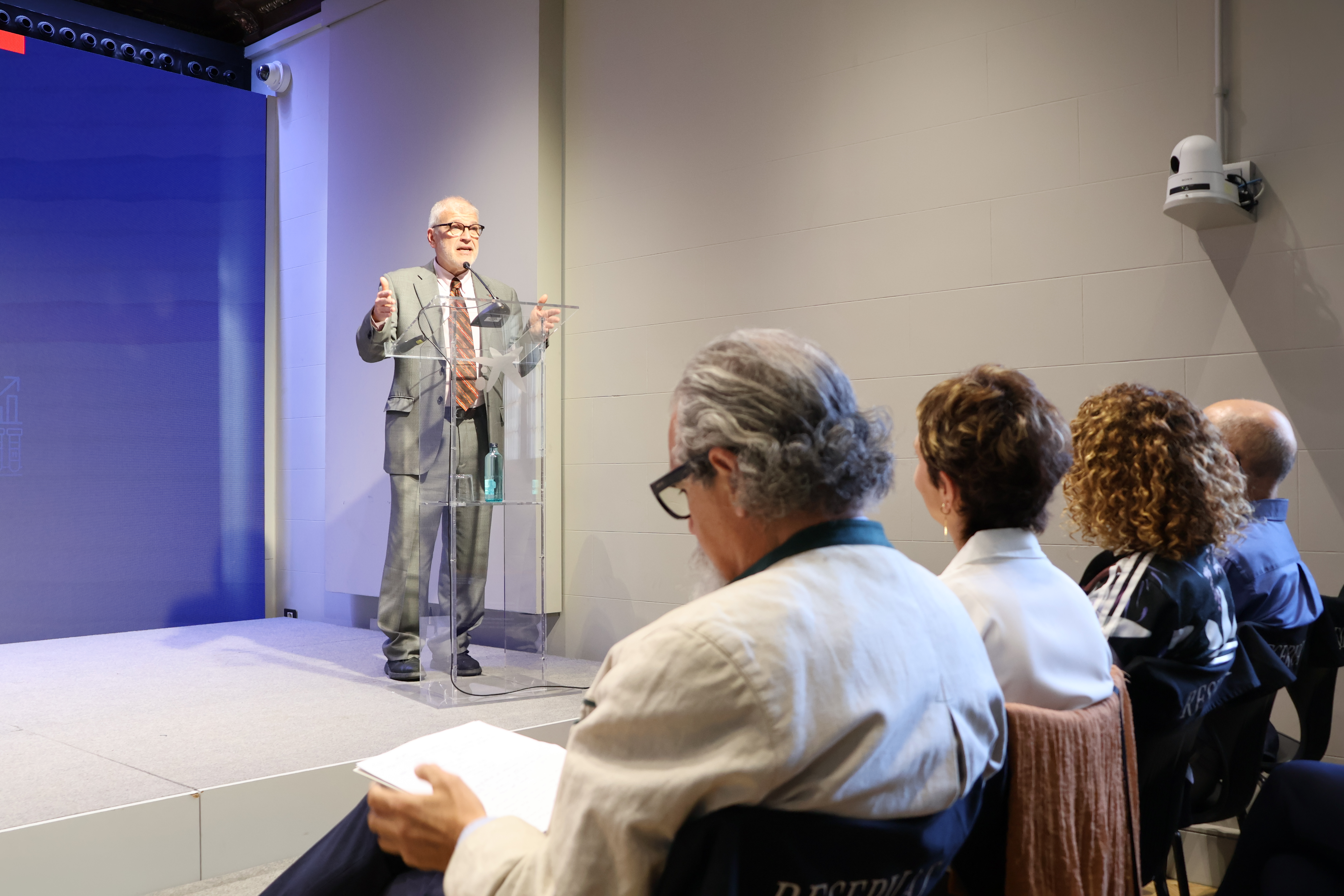
The keynote lecture, "The public health we want: horizons for research and innovation", was delivered by Antoni Plasència, director general for Research and Innovation at the Department of Health, and introduced by Jordi Casabona, senior consultant at CEEISCAT.
Cinta Folch, who has been scientific director of CEEISCAT since January, then presented the centre's strategic lines for the 2025-2030 period, outlining a new phase based on more integrated, action-oriented research with an impact on public health policies, with a particular emphasis on innovation, gender perspective, community-based research and international projection.
Research in action: the Flash Talks
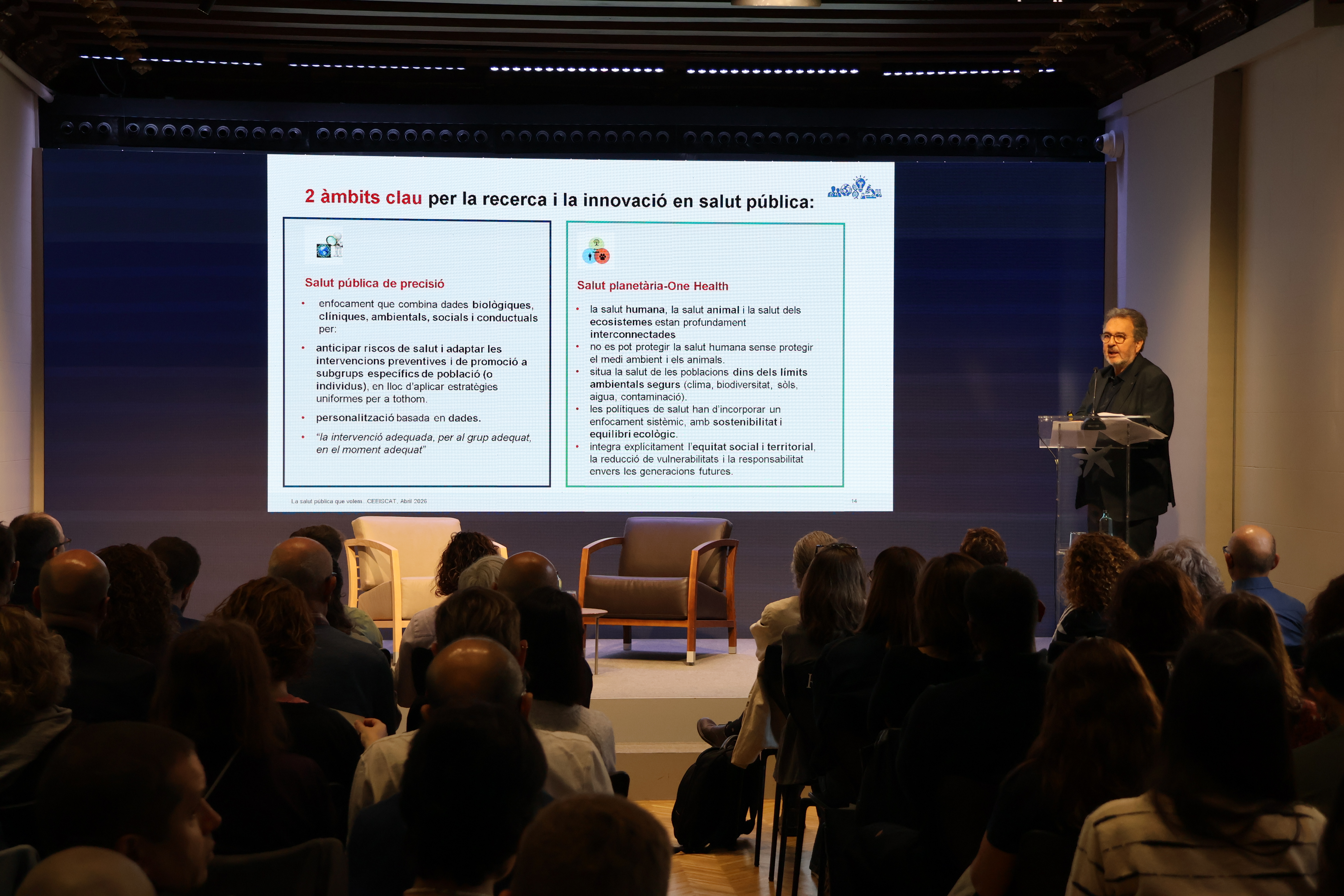
One of the central moments of the meeting was the Flash Talks session, chaired by Rosa Mansilla (Sub-Directorate General for Addictions, HIV, STIs and Viral Hepatitis (SGAVIHV) of the Public Health Secretariat) and Sara Castillo (CEEISCAT). In a brief and dynamic format, it showcased the main research lines and strategic collaborations.
Across eight presentations, key projects and initiatives were highlighted:
- TESTATE, on innovation in online screening for HIV and STIs, presented by Cristina Agustí (CEEISCAT) and Jorge Néstor García Pérez (Infectious Diseases Department, Vall d'Hebron Barcelona Hospital Campus)
- PISCIS, as an example of collaborative clinical research, with Beatriz Julieta Blanco (CEEISCAT), Mario Martín (CEEISCAT) and Arkaitz Imaz (Infectious Diseases Department, Bellvitge University Hospital)
- The integration of a gender perspective in research on multilevel determinants of HIV/STIs, presented by Helena Gonzàlez (CEEISCAT) and Mar Linares (SEXPROM study participant)
- The community networks DEVO and COBATEST, with Laura Fernández (CEEISCAT) and Marta Melgosa (Fundació Antisida Lleida)
- The evolution of epidemiological surveillance systems, presented by Evelin López (CEEISCAT) and Carles Pericas (Agència de Salut Pública de Barcelona, ASPB)
- The international network Right PLUS, with Nicolas Lorente (Coalition PLUS & CEEISCAT) and Federico Pipitone (Right PLUS)
- Challenges in causal inference in epidemiology, presented by Esteve Muntada (CEEISCAT) and Cristian Tebé (IGTP)
- And a new model of care for viral hepatitis in migrant populations, with Elisa Martró (IGTP) and Tahir Rafi Khanum (Drassanes International Health Unit / Vall d'Hebron)
This session highlighted the importance of collaborative work between CEEISCAT and the different stakeholders involved, connecting research with clinical practice, the community and public health decision-making.
Participation and recognition
The meeting also included a participatory session, "Pulse Check: CEEISCAT 2030", facilitated by Héctor Martínez and Beatriz Rojas (both from CEEISCAT), which gathered attendees' views on the centre's future challenges and priorities.
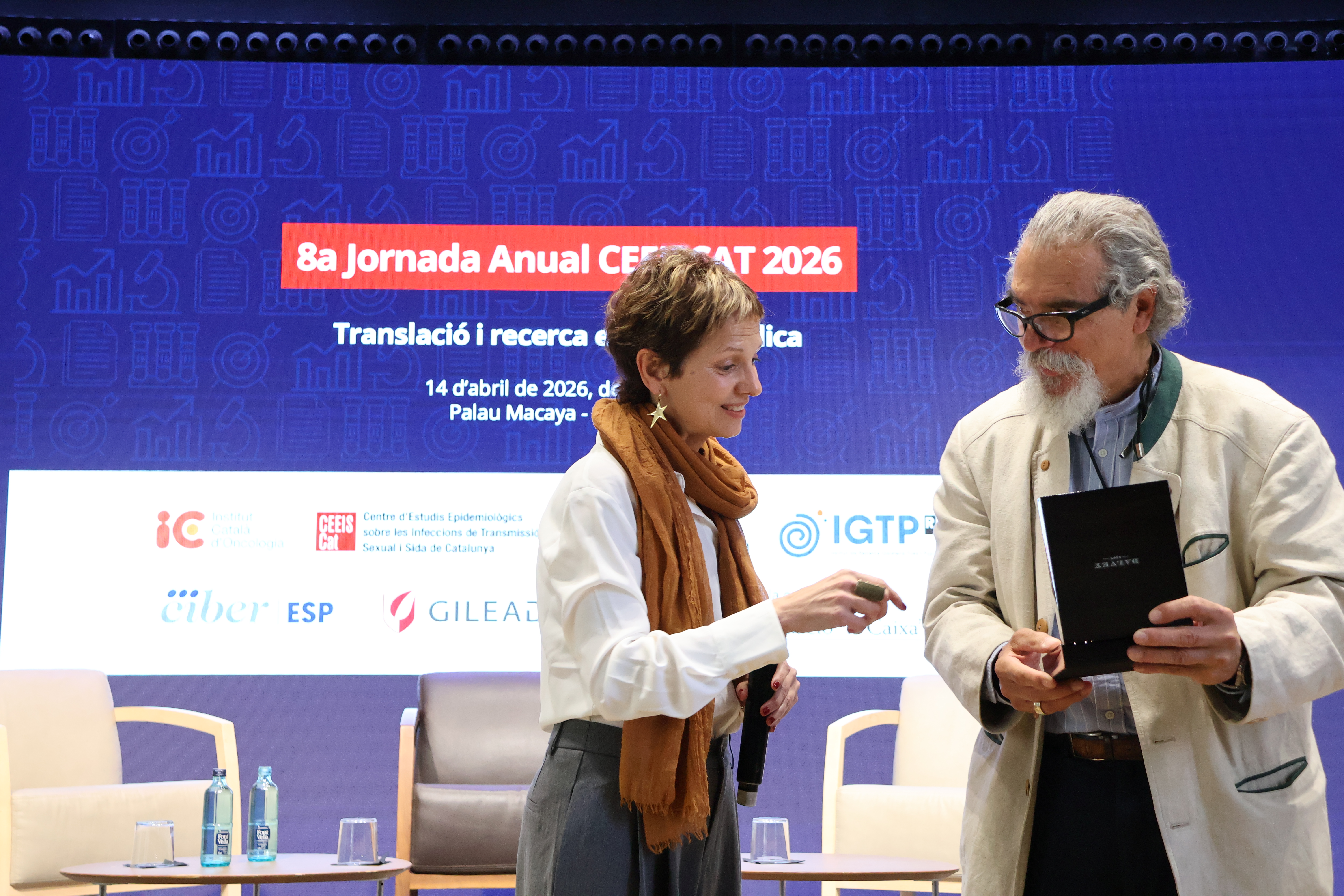
One of the most notable moments was the tribute to Jordi Casabona, founder and key figure of CEEISCAT, featuring a farewell video and a recognition event with the participation of the entire team.
A consolidated model of networked research
With more than 30 years of experience, CEEISCAT has established itself as a reference centre in epidemiological surveillance, monitoring and evaluation, and applied research in HIV, STIs and other emerging infections.
Its model, based on collaboration between institutions, the healthcare system, universities and community organisations, has been key to generating useful and transferable evidence with a real impact on public health policies.
Closing remarks
The meeting concluded with closing remarks from Carles Esquerré, General Manager of IGTP, and Cinta Folch, Scientific Director of CEEISCAT, who reaffirmed the centre's commitment to a public health approach grounded in evidence, innovation and collaboration.